Abuse detection field guides
Explore account linking, content and fraud boundaries, rolling activity, review workflows, evaluation and cost.
Evidence, implementation questions and buying trade-offs for teams evaluating application protection.
Latest guides
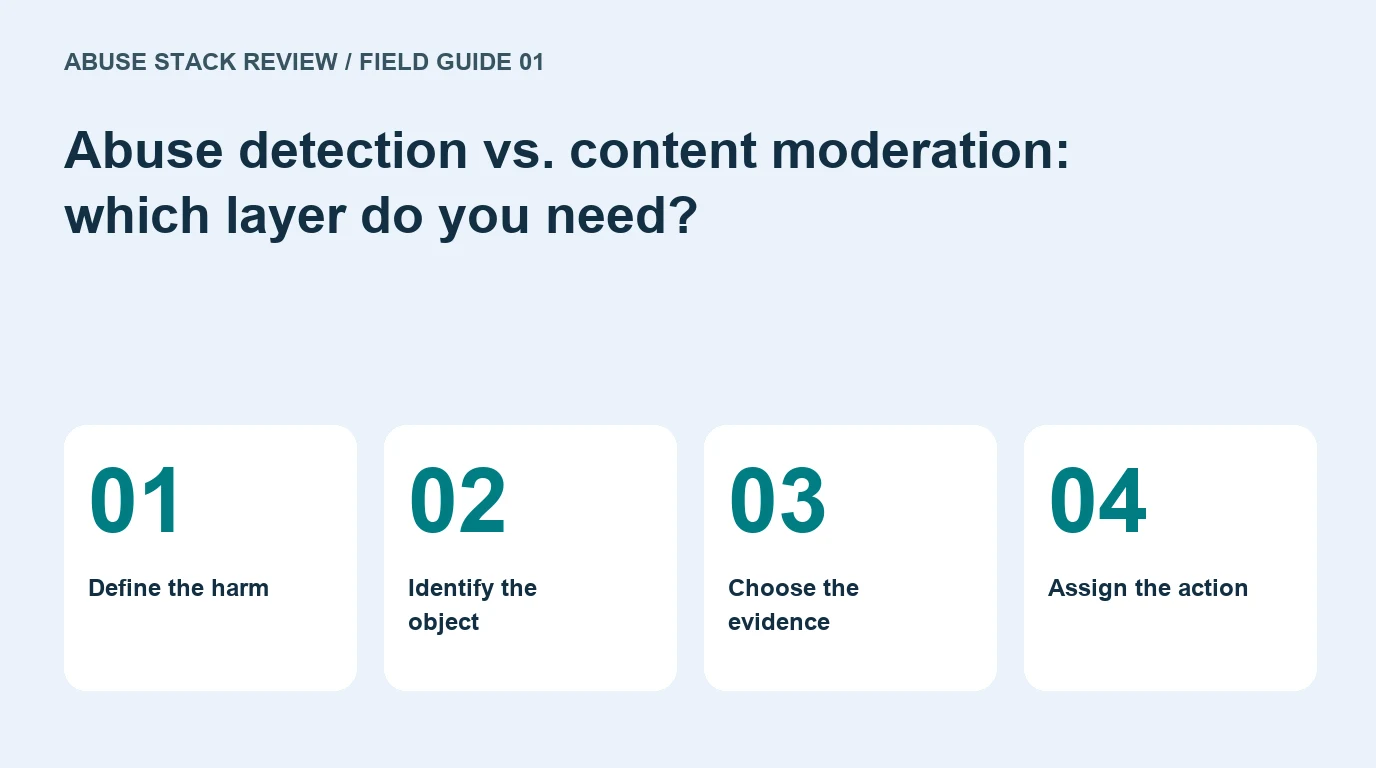
Abuse detection vs. content moderation: which layer do you need?
Separate account misuse, unsafe content and payment fraud before choosing a platform. Map each decision to evidence, ownership and an evaluation route.
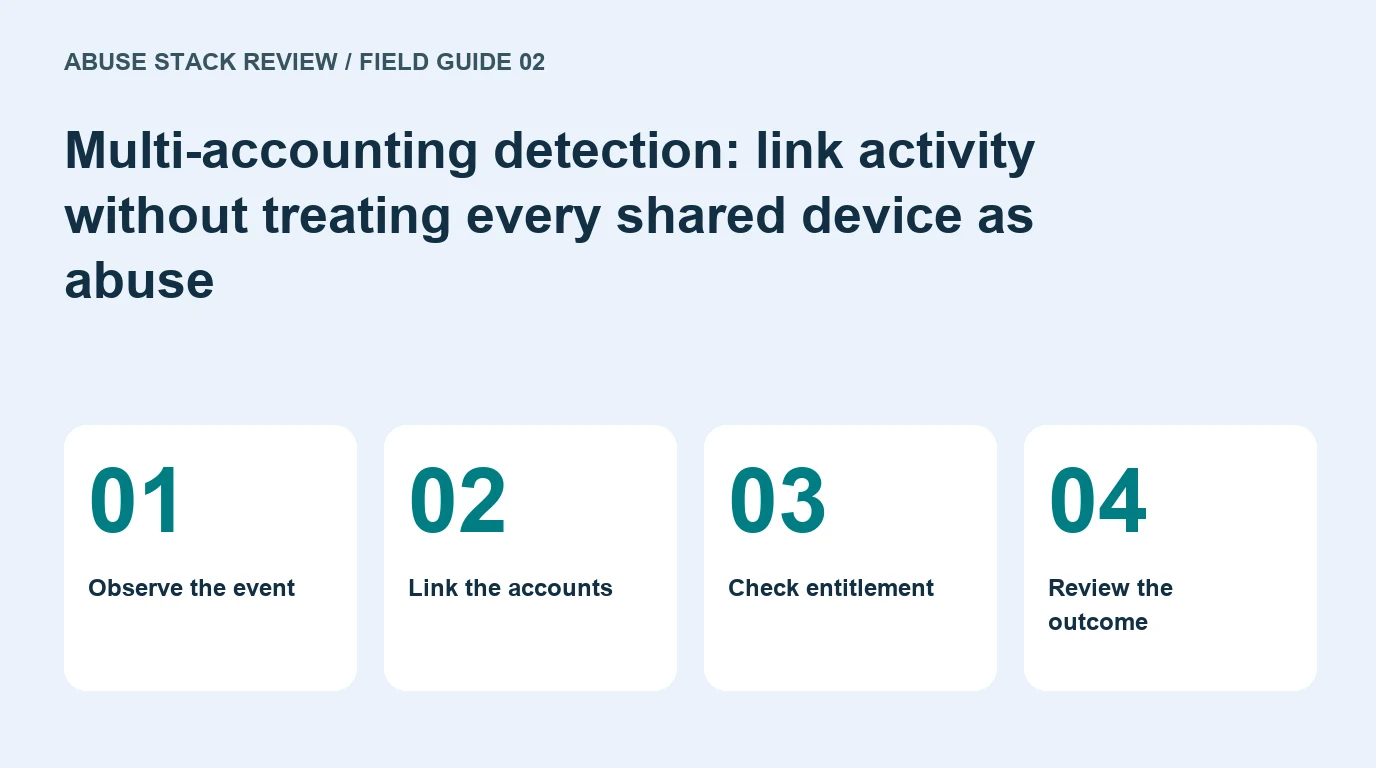
Multi-accounting detection: link activity without treating every shared device as abuse
Evaluate device relationships, benefit claims and account history together. A practical guide to repeat signups, legitimate sharing and investigation.
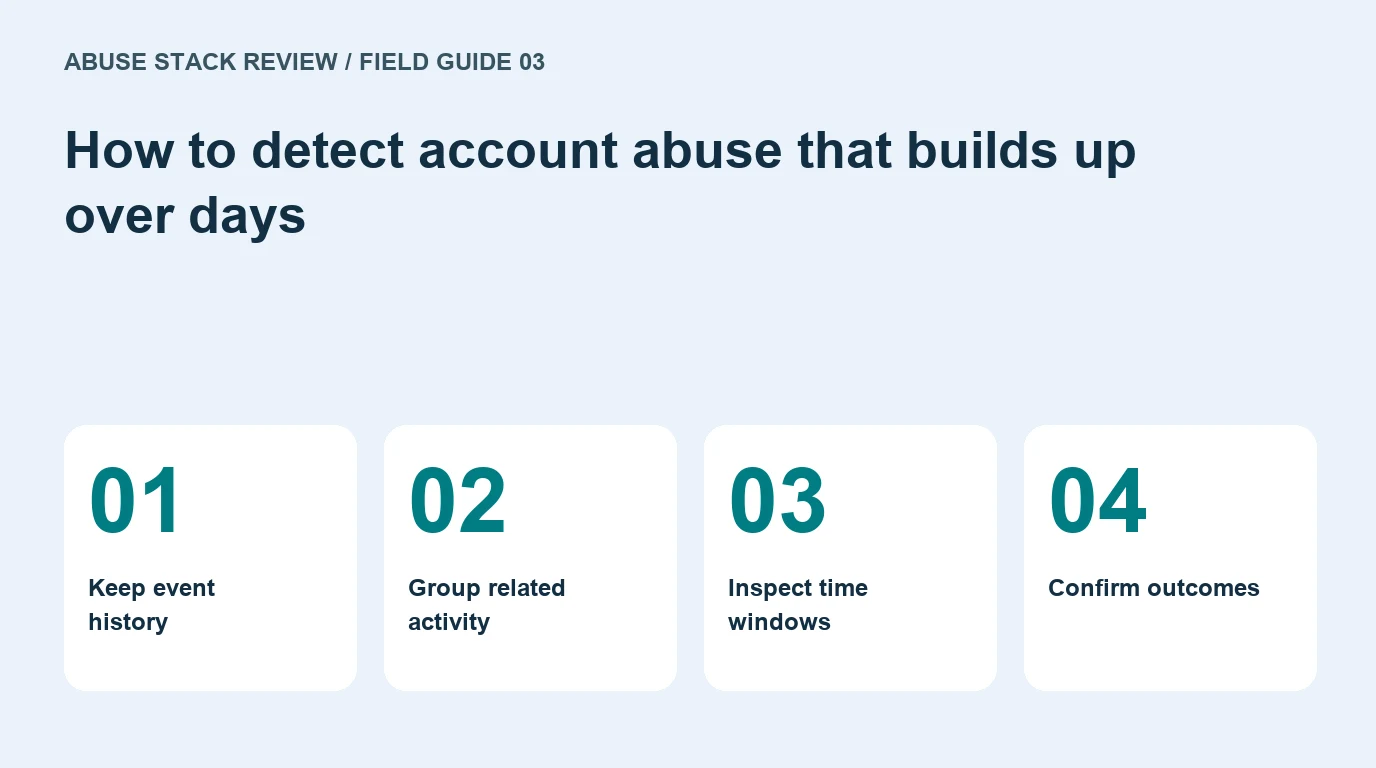
How to detect account abuse that builds up over days
Use event history, rolling windows and linked accounts to investigate cumulative abuse. Keep repeated delivery, shared devices and unresolved cases separate.
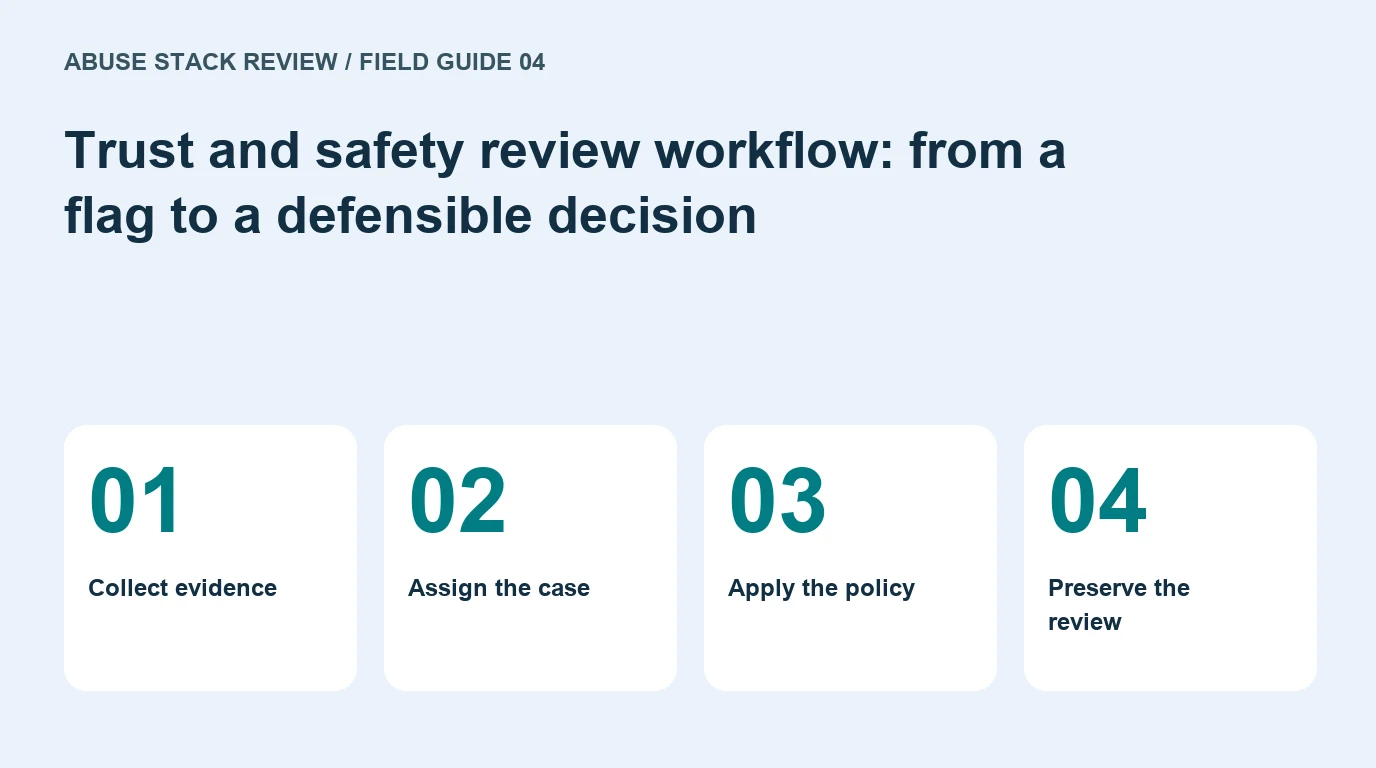
Trust and safety review workflow: from a flag to a defensible decision
Build a review path with reasons, case ownership, proportionate actions and appeals. Compare detection, policy decisions and case-management needs.
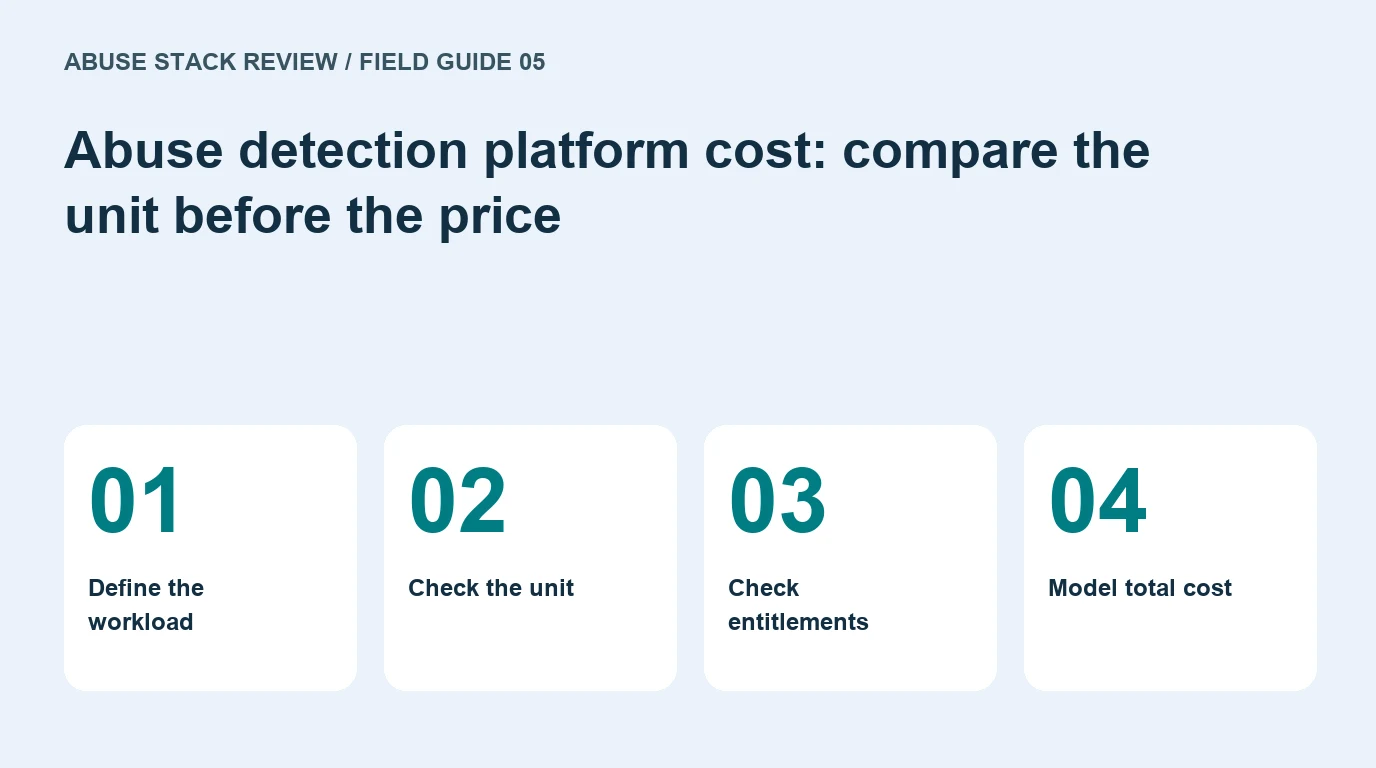
Abuse detection platform cost: compare the unit before the price
Compare identifications, Risk API calls, fraud checks, content items and platform contracts. Include plan entitlements, review effort and legitimate-user friction.
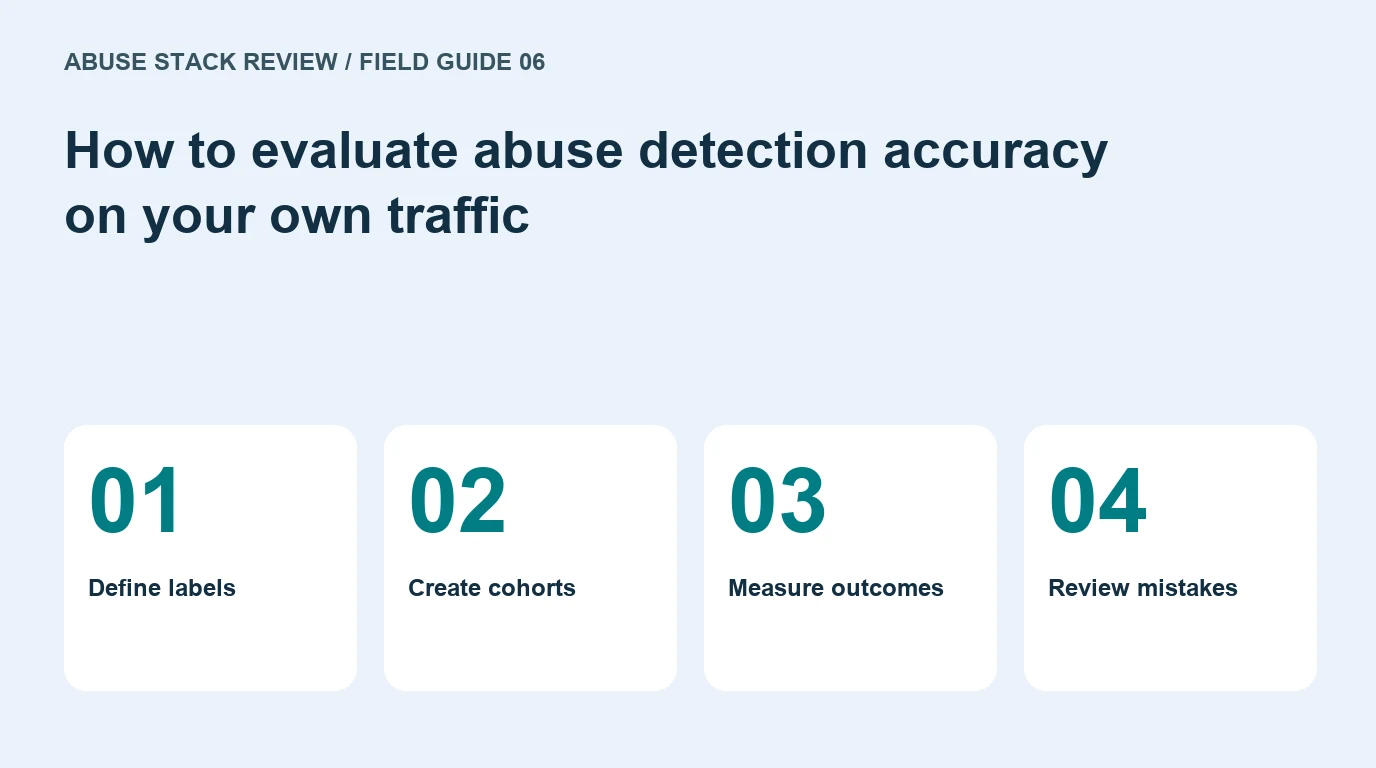
How to evaluate abuse detection accuracy on your own traffic
Measure precision, recall and legitimate-user interventions with explicit labels and denominators. Keep unresolved outcomes and different abuse types separate.
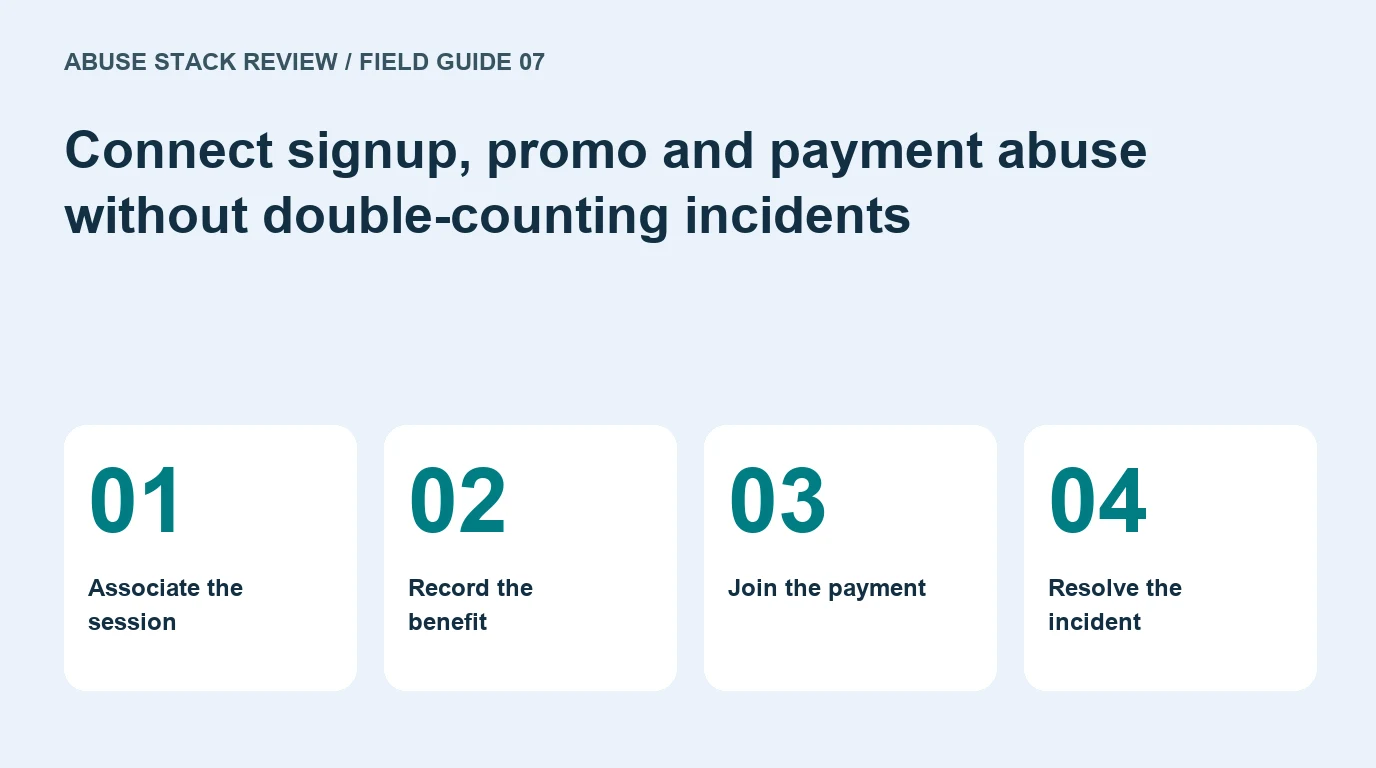
Connect signup, promo and payment abuse without double-counting incidents
Join account events, benefit claims and payment outcomes with stable references. Preserve reasons, retries and lifecycle ownership across your abuse stack.
Explore checkers, demos and evaluation routes →
Summarize this page with
Practical research guides
Select an abuse platform around decisions and casework
Select abuse detection platforms by the action, evidence, review process and workload, with practical distinctions between account risk and financial operations.
Device and visitor evidence in abuse investigations
Use device relationships, browser observations and visitor analytics in abuse cases while keeping recognition separate from private access and person identity.
Network masking and automation in an abuse investigation
Connect masking, automation and trusted endpoint handling to platform policy, with clear treatment of privacy services, challenges and legitimate account activity.
Multi-accounting detection: link activity without treating every shared device as abuse
Evaluate device relationships, benefit claims and account history together. A practical guide to repeat signups, legitimate sharing and investigation.
Abuse controls for benefits, content and acquisition
Protect trials, compute, promotions, referrals and partner value through explicit eligibility and durable records of grants, consumption, qualification and reversal.
Commerce and specialist abuse: build the right evidence trail
Build an abuse case across payment, refund, identity, travel and specialist events while preserving the evidence and decision owner needed for each action.